About BeAta
The pattern I kept seeing
The smart ones don't perform well in school.
I'm BeAta Fuller. I spent thirty years working out why, and the 7 Seeds of Success® is what came out of it.
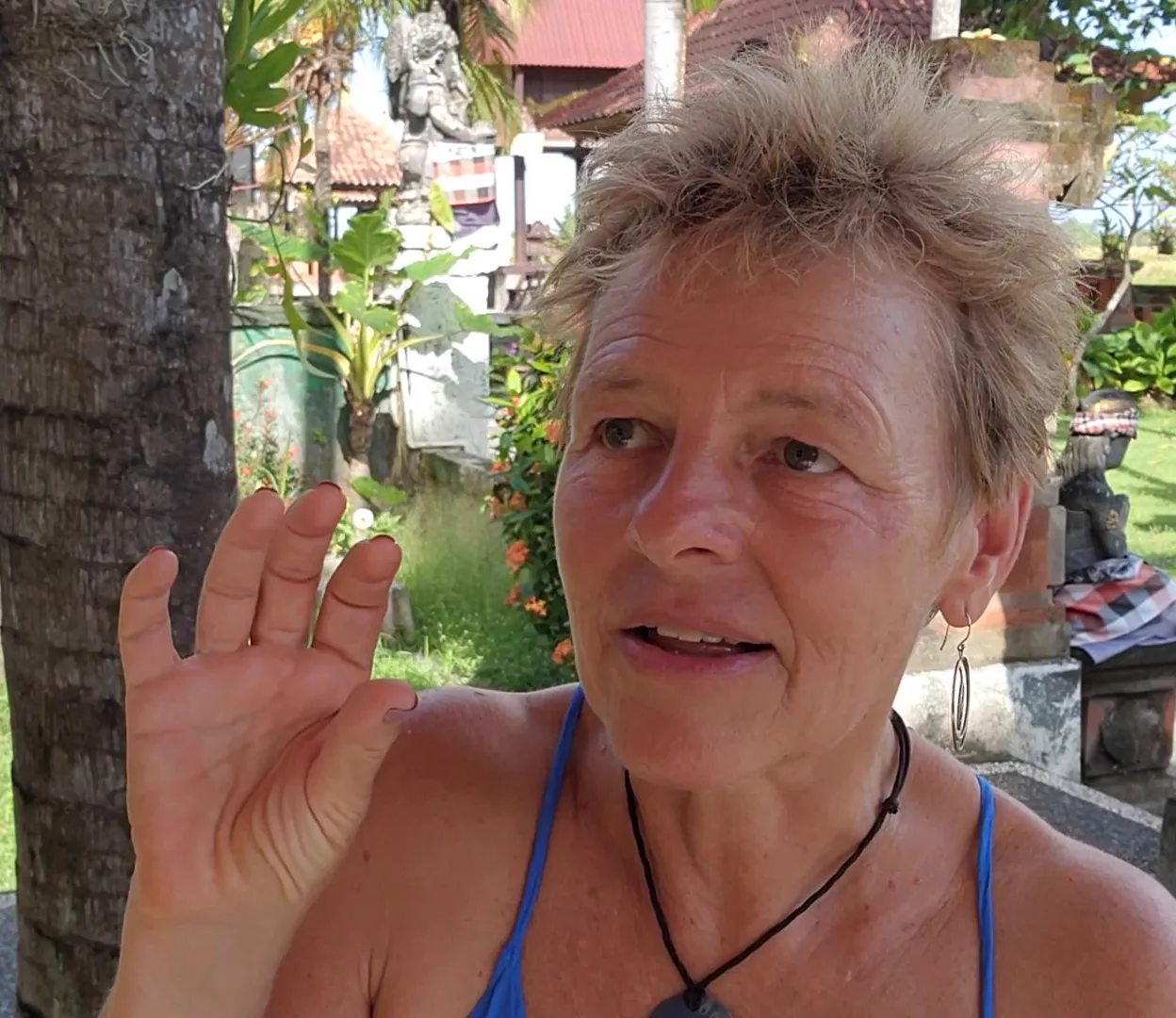
I noticed it early. In the children I worked with, in my own children, and first of all in myself.
I was dux of my school. Everyone called me smart.
I learned English as my third language at the age of thirteen and had achieved top marks within four years.
I knew I was performing (manipulating a system I could read clearly), and I also knew that other kids were genuinely smarter than me.
The gap between the label and reality stayed with me for a long time.
When I had children, I watched the same pattern emerge.
My older son was a performer, capable, socially attuned, and completely exhausted by it. Three days a week at school (we never did more) and I would lose him by the time he reached the car. Irritable, tearful, a different child.
My younger son was the opposite. He arrived at answers by his own routes, the correct ones, but school said the working was wrong. I could see, clearly, what would happen to his self-belief if we stayed.
You may have watched the same thing happen at your own kitchen table.
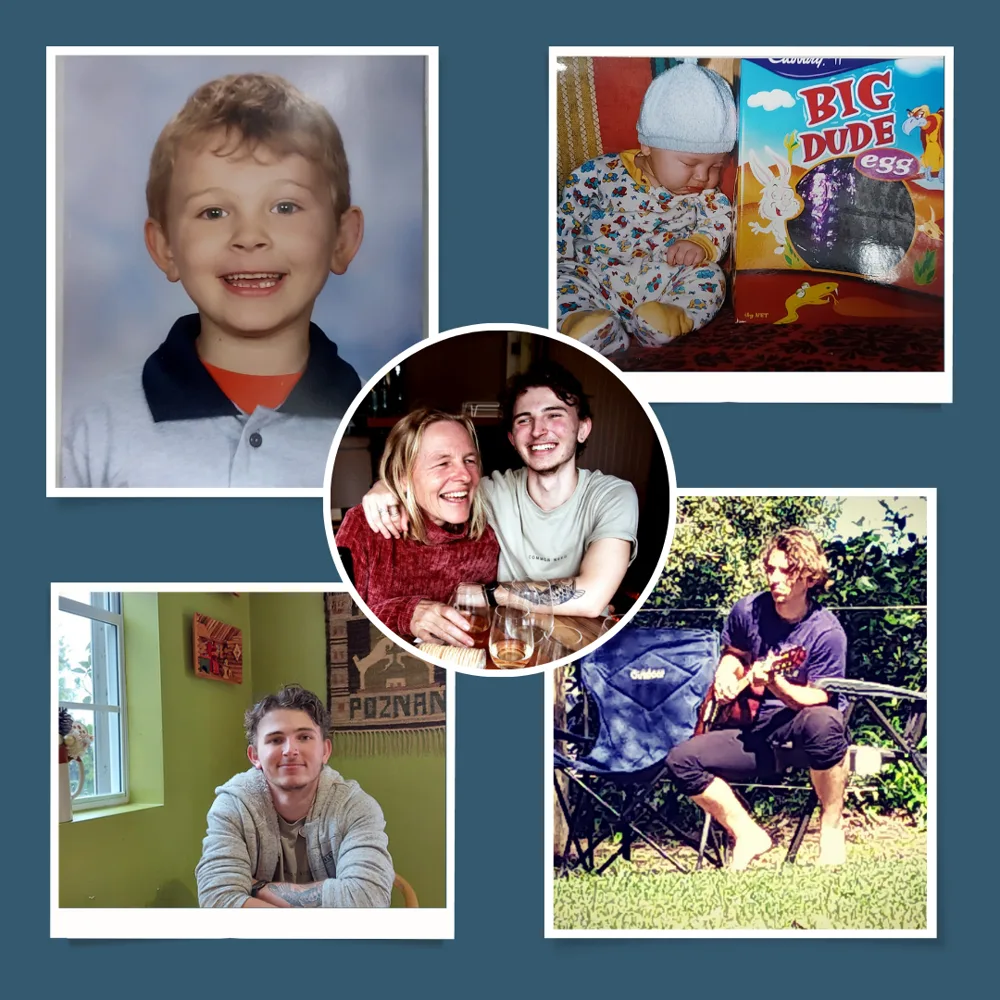
They are adults now, self-directed and building their own lives.
My younger son, the one school nearly convinced he wasn't smart, launched his own activewear business at 15. He talked his way into a Certificate IV in Personal Training before his old classmates had finished school. A year later he was managing a gym.
My older son walked into Fins, a celebrated restaurant in Northern New South Wales, with no experience. He was second-in-charge within months. Wine caught him there, and it carried him to Attica in Melbourne, where he rose to Assistant Head Sommelier in about half the time it usually takes.
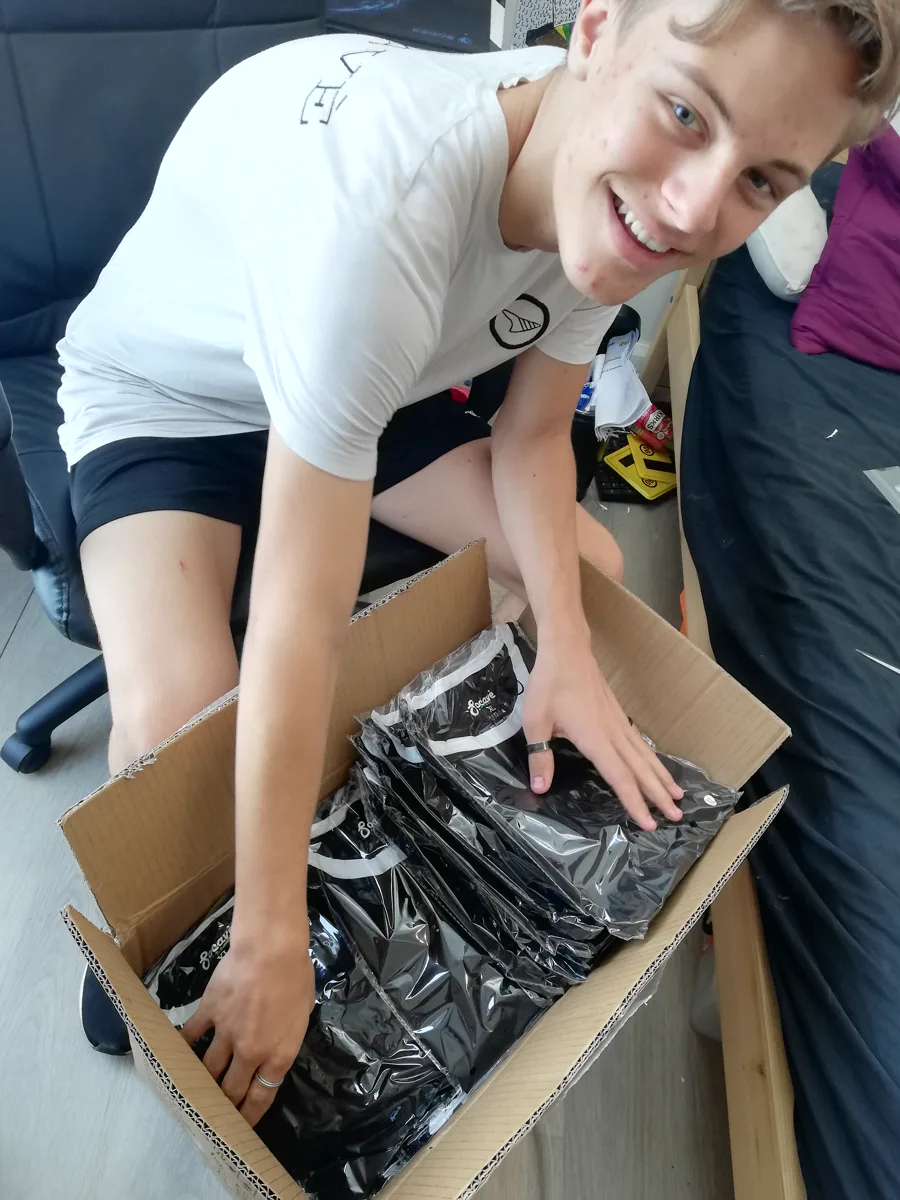
Thirty years of watching children. One pattern, over and over.
In my professional work, I saw the same pattern play out in hundreds of families.
Children labelled as ADHD, dyslexic, or "behind" who weren't any of those things. They had gaps in their developmental foundations. When we worked on those foundations, not on the symptoms or the schoolwork, everything that rests on those foundations shifted. Their confidence, their focus, their social ease, their physical coordination.
None of those things were practised directly. They emerged, because the ground was ready.
For over 25 years I worked as a behavioural and developmental optometrist. I spent about 80% of every session on the body, balance, rhythm, movement, before I went anywhere near the eyes, because vision can't be addressed until the foundations under it are in place.
The authorities eventually told me that wasn't optometry. They were right. It was something the profession didn't have a name for yet.
For three years I ran the weekly outings for our homeschool community, and it grew until I could not count the children on a Monday. Theme parks, kayaks, the ice-skating rink, laser tag in a paddock, the trampoline park, the museum, the high ropes course, board games at the library. I watched them, and I talked with them about what they were working out, while they were in the middle of working it out.
That is where I learned most of what I know.
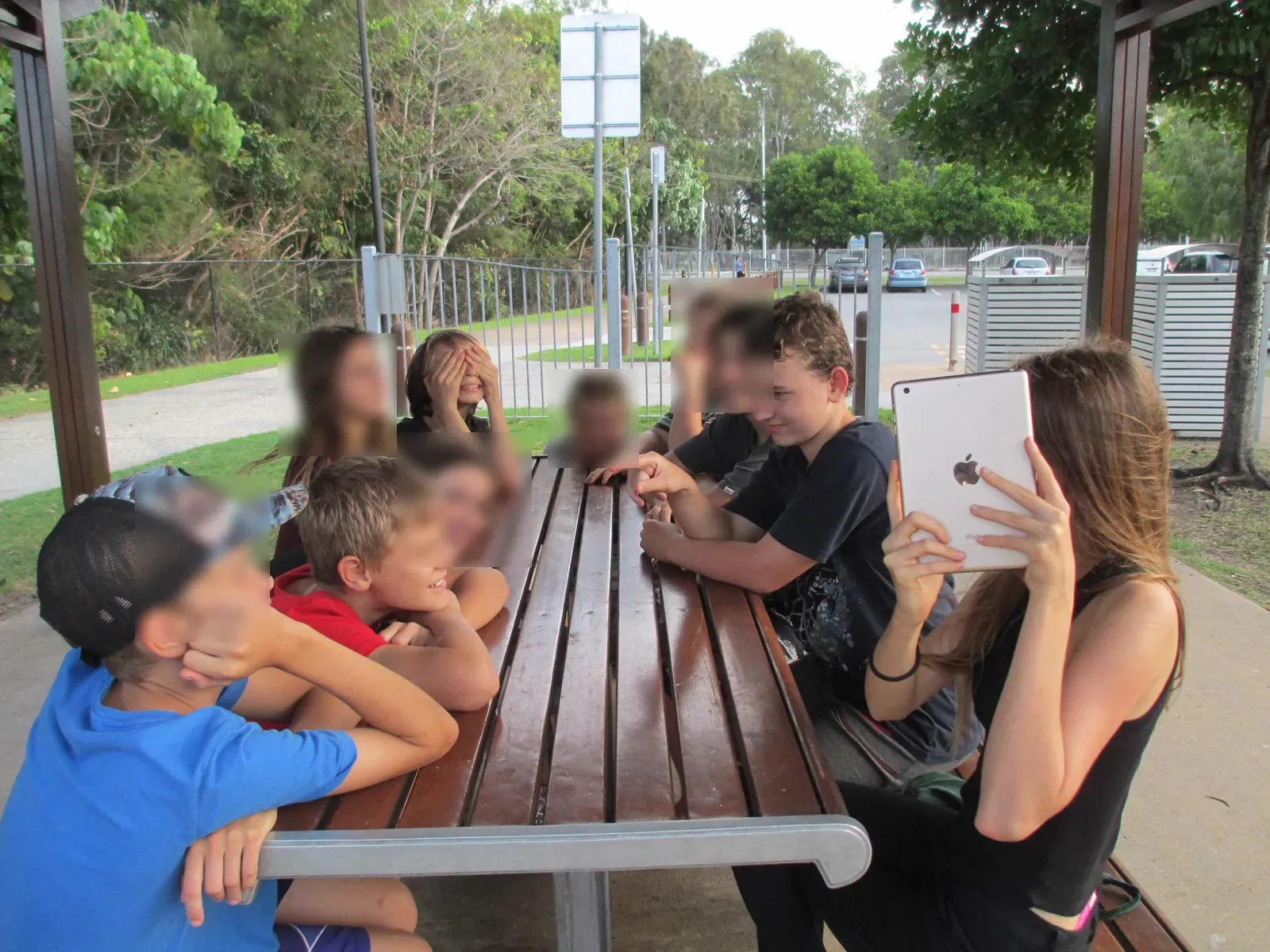
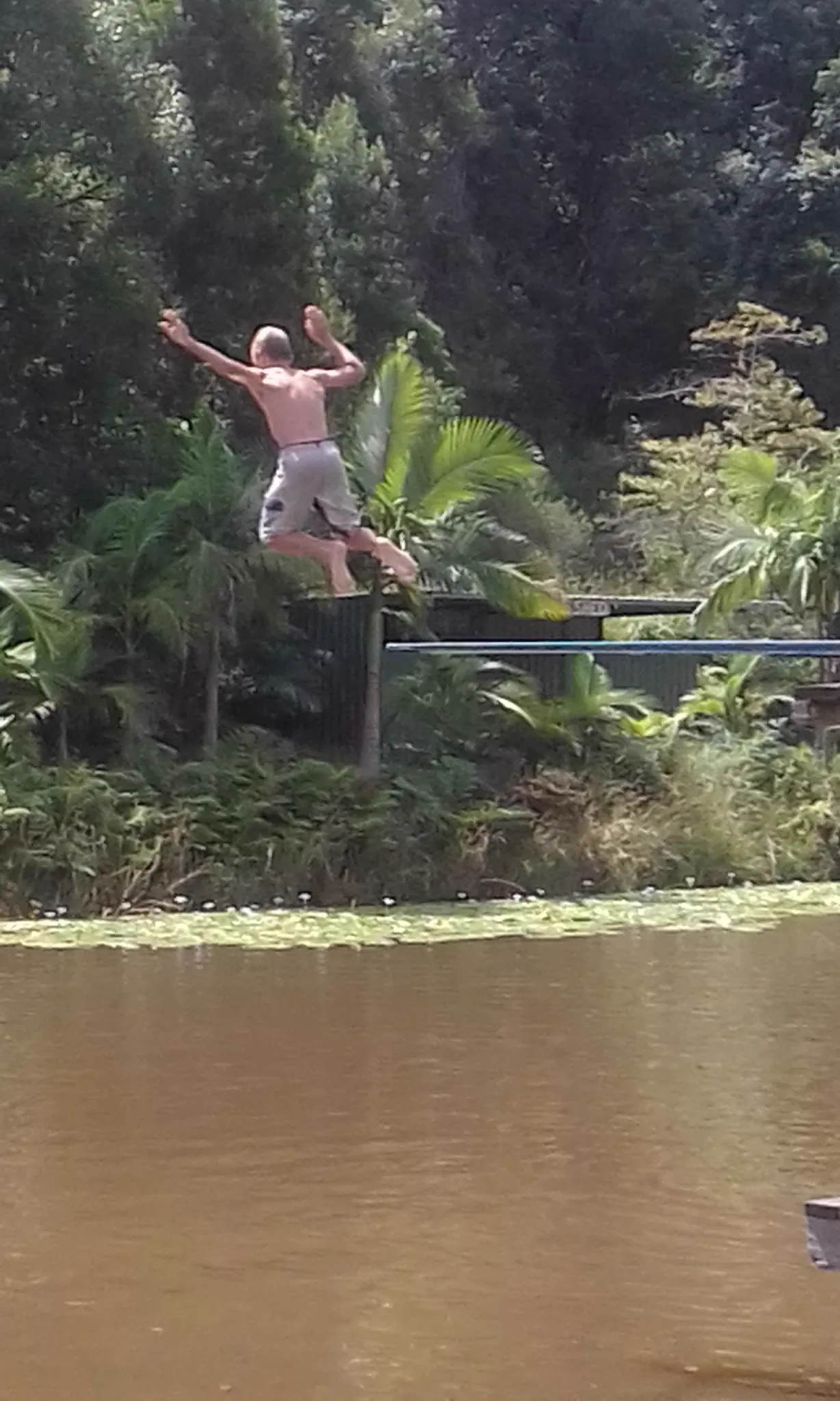
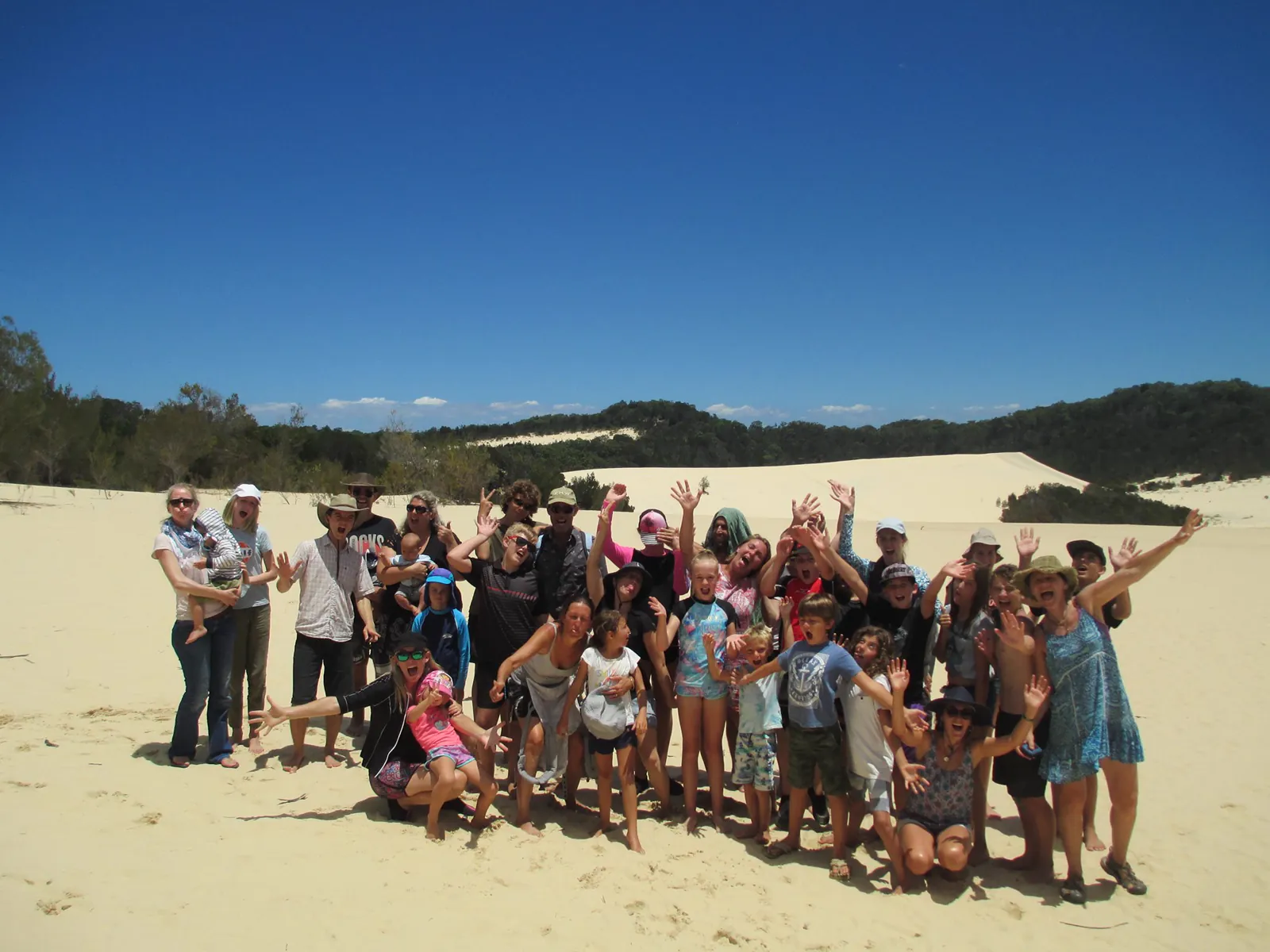
Weekly outings. Three years of them.
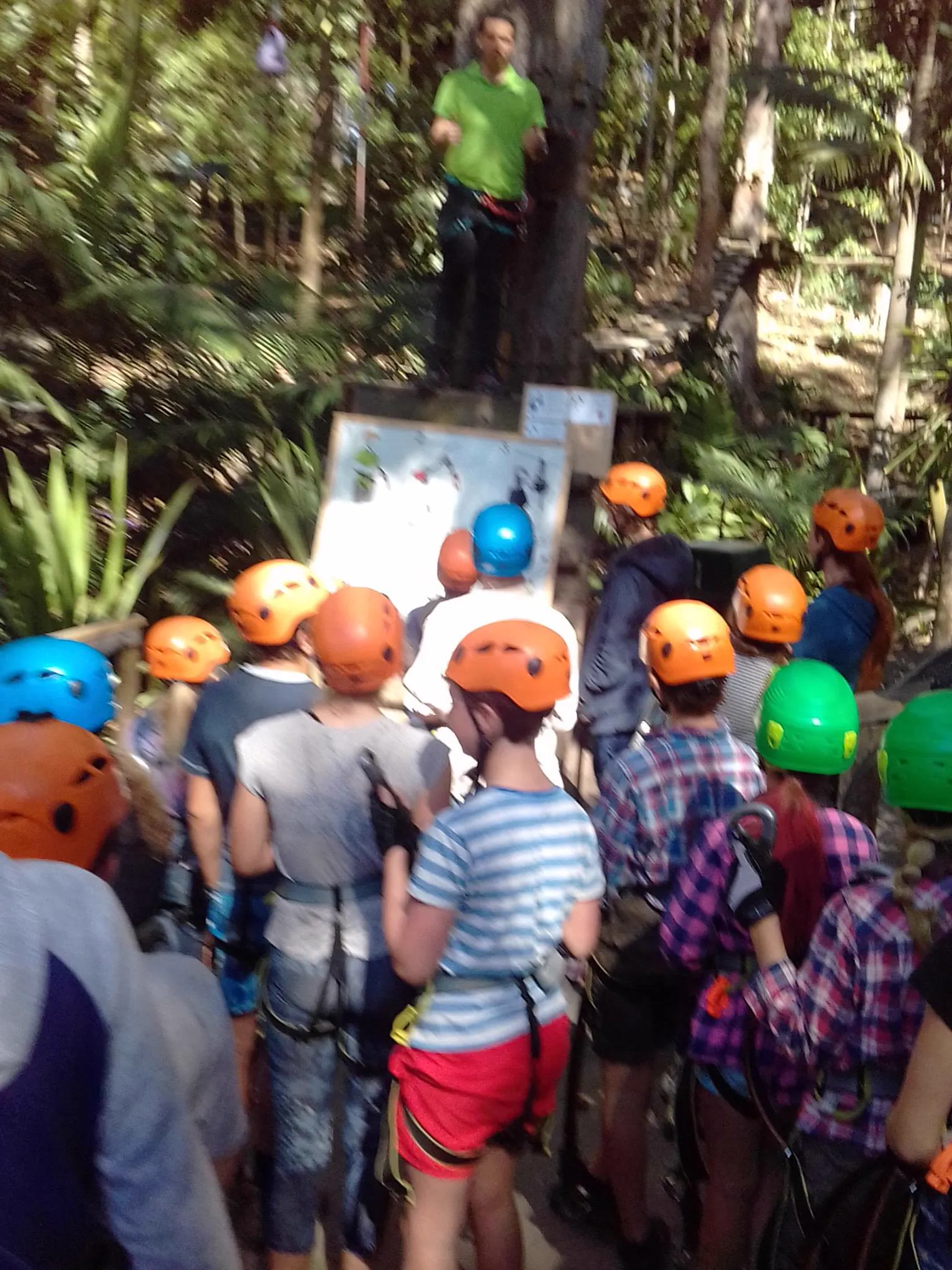
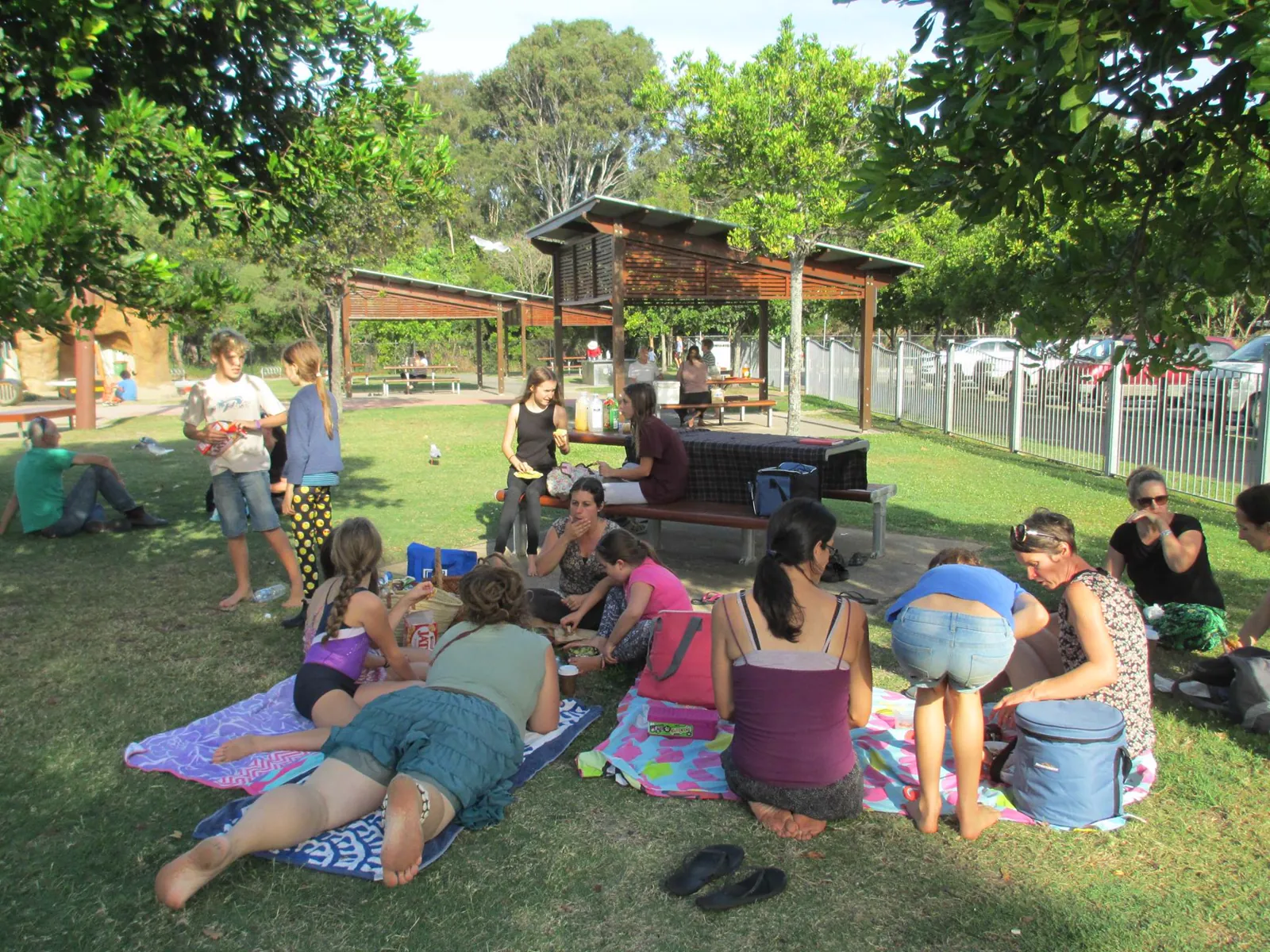
The moment that drove all of it: a parent bringing me a six-year-old and saying, "the teacher told us to come, they're behind."
- 25+ years as a behavioural and developmental optometrist, working with children labelled with learning difficulties
- Two sons educated outside school from years 3 and 4, now self-directed adults
- Creator of the 7 Seeds of Success®, a registered framework
- Working with families in Australia, the USA, the UK, Europe and Asia
Before they had a name, they lived on post-it notes.
Hundreds of them, colour-coded, covering every wall and mirror of our home. Each one holding one thing I believed a person needs to succeed at life.
My family walked on tiptoes for months. Nobody could see themselves in a mirror.
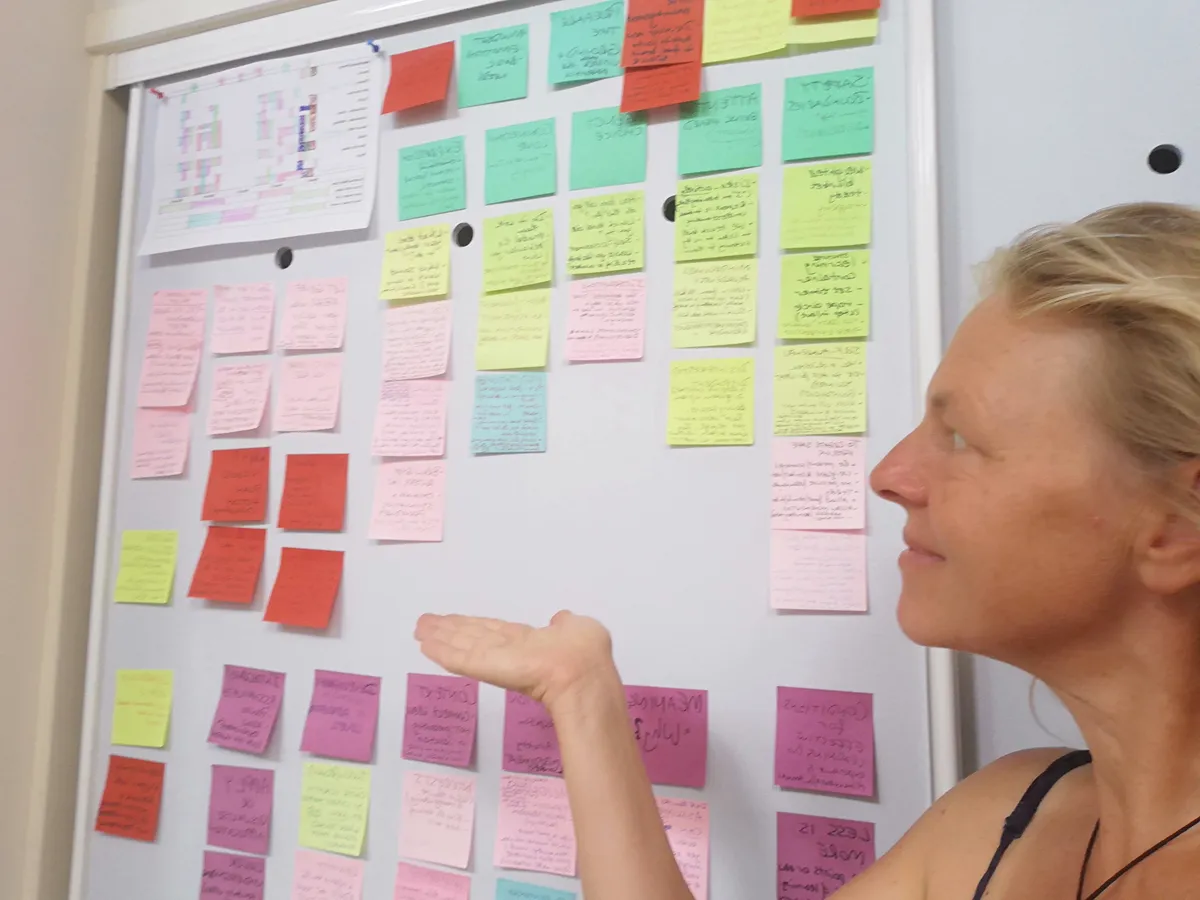
At night, lying in bed, I'd suddenly know: that one goes with that one. The hundreds became groups. The groups became five columns.
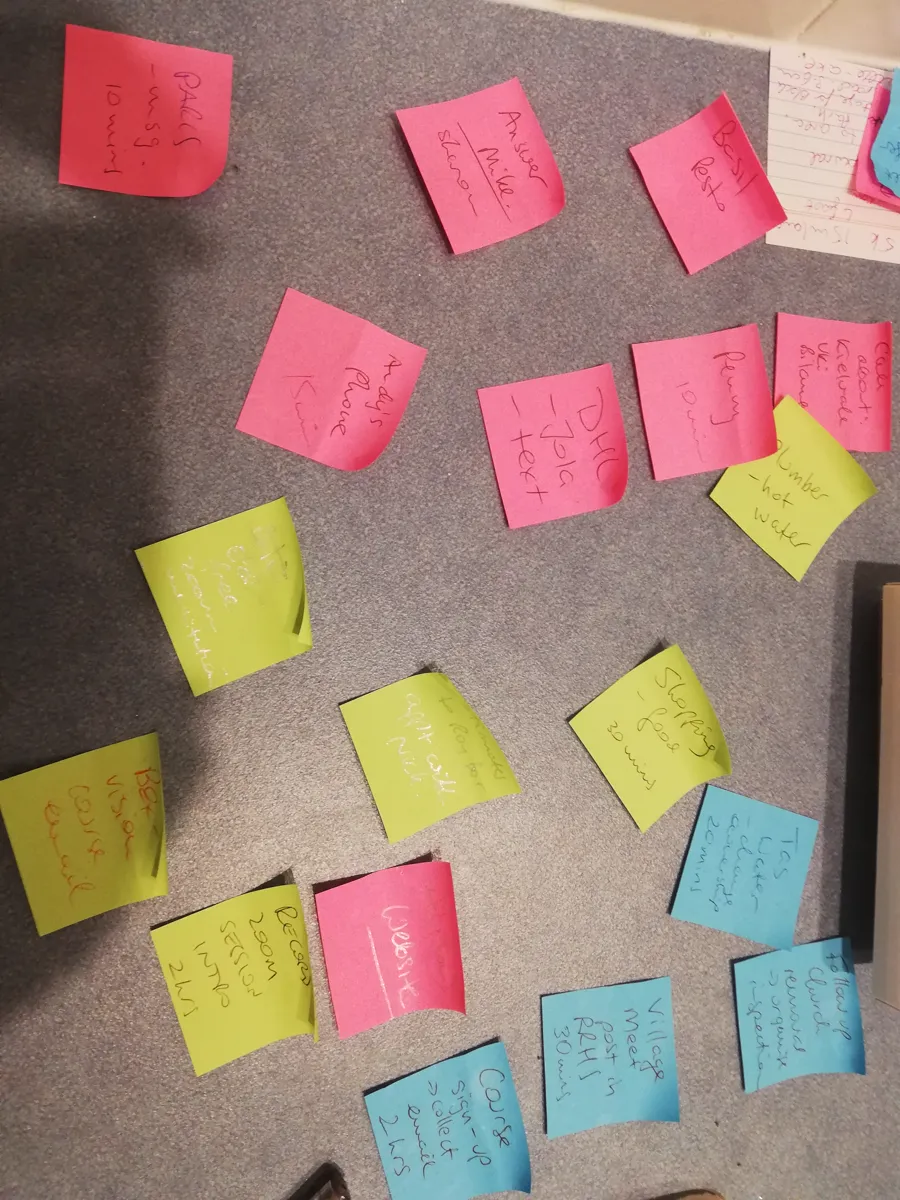
The same year, in my notebook, in my own hand:
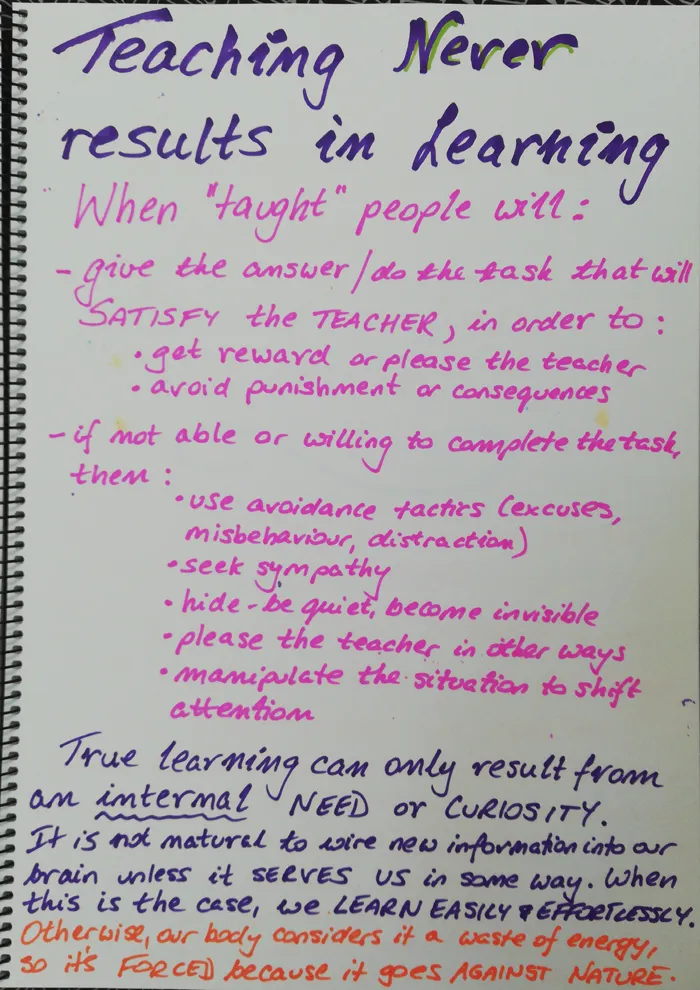
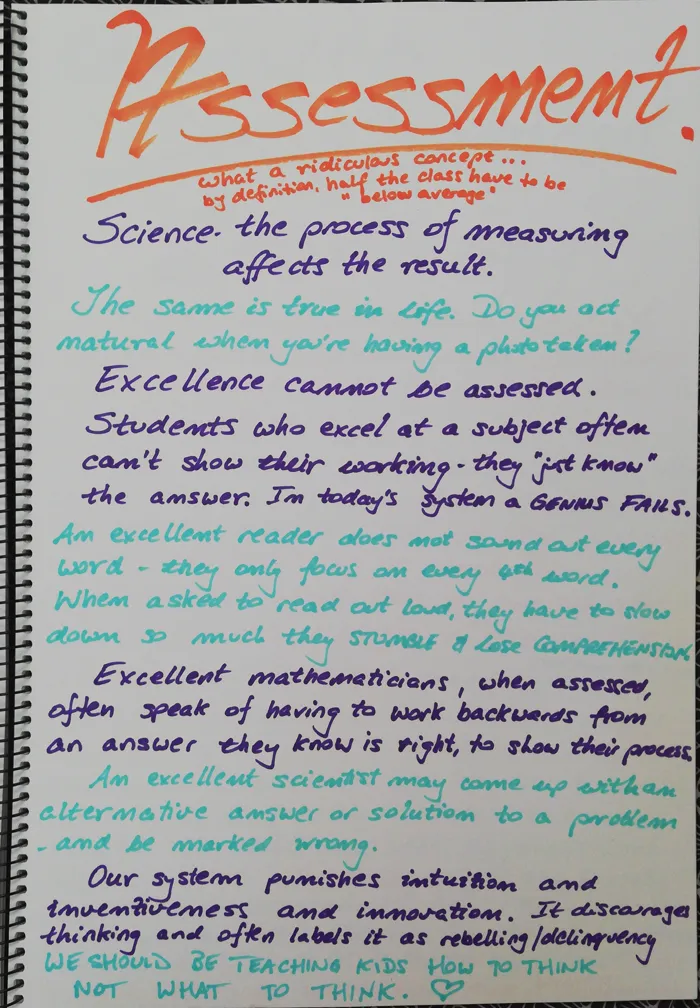
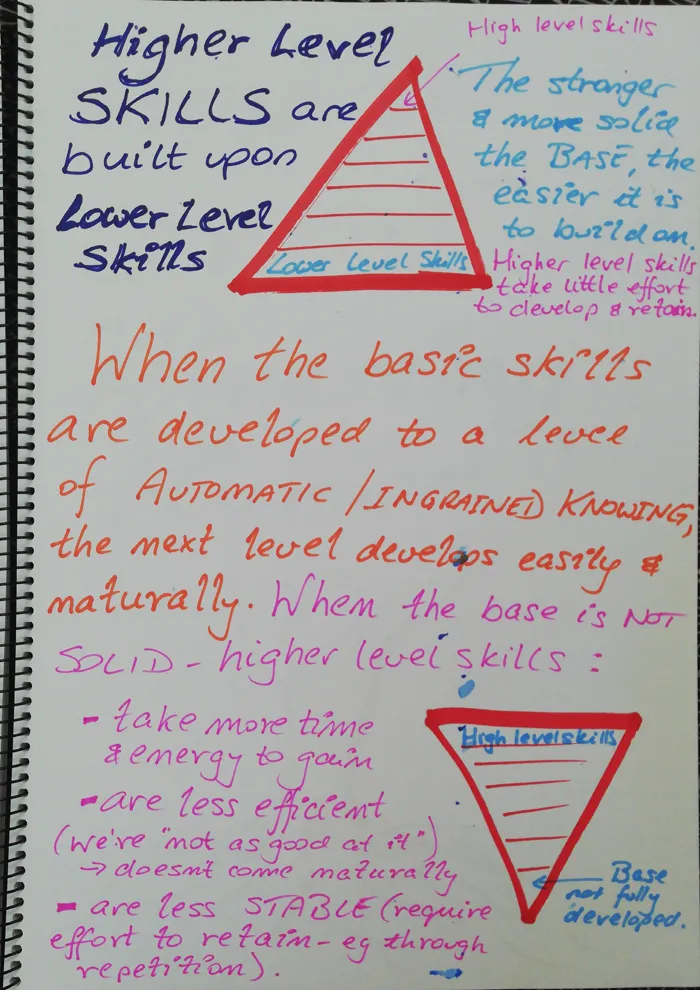
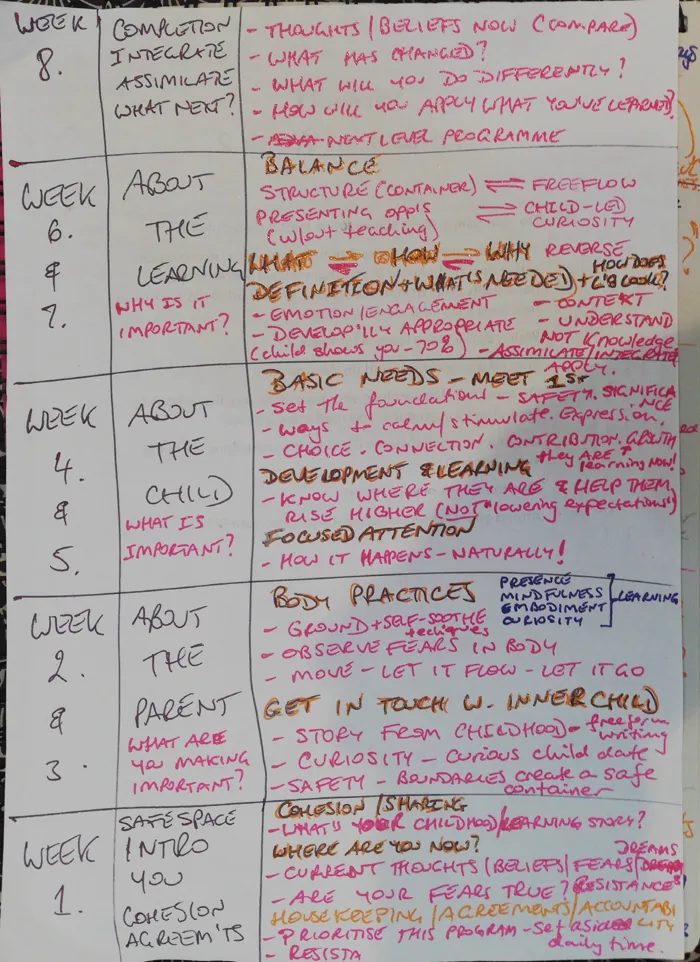
What came off those walls is now written down. The free ebook tells the whole story in twenty minutes.
People ask me what this is.
It is easier to start with what it isn't.
- It is not a curriculum.
- It is not a program you finish.
- It is not a diagnosis, and it never hands a child a label.
- It is not a philosophy you have to believe in first.
- It is not something you do instead of your life.
It is a map.
The boundary is firm and the room inside it is wide. Once you can read the map, you use it in the life you already have, on an ordinary morning, in your own kitchen.
Tell me what's happening.
Write me a few lines about your child and what you are seeing. I read every message that comes in, and I'll write back with where to start.
Any family, any age.
Email hello@wisdomeducation.org →Would rather read first? The free ebook is the whole framework in twenty minutes.
Ready to start at home? Raise Brilliant Kids is the framework in one short video a day.