Children
School wasn't designed for your child.
You've known this for a while.
Children who are bright, curious, full of ideas, the ones who question and experiment, don't always thrive in the schooling structure. The expectation to sit, follow instructions, produce the right answer the right way, has an impact.

How kids cope
They react in one of two ways. They dim themselves down to fit and comply, or they push back and get labelled difficult.
Either way, they learn the same thing: the way they naturally are isn't okay.
Most parents see it happening. They just don't know what to do about it.
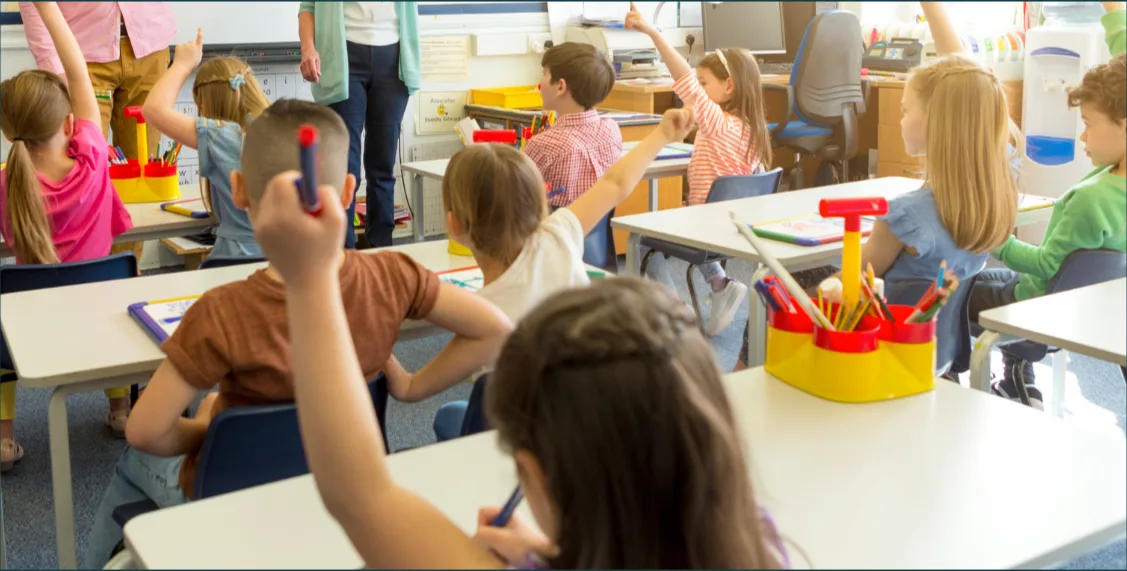
The child who comes home exhausted from a day of holding it together isn't fine.
Something is being asked of them that should never have been asked.
The 30-day "Raise Brilliant Kids" program shows you exactly what to do about it.
Join the 30-day program →How adults cope
Most parents are preparing their child for a future without a map for how children develop. So they lean on the only framework they know: schooling-type structure and subjects.
The problem is that these very things work against their child's development, capacity and ability to learn.
It appears to work for some children, at least for a while. For others, the cost is high: their confidence, their curiosity, their sense of who they are, their internal wellbeing.
The question
Most parents and teachers start with the questions the system hands them:
How to get them to focus.
How to stop the meltdowns.
How to get them to care about school again.
Those aren't bad questions, but they're not the right ones.
The question worth asking is:
Does the structure your child is in match how their brain and body develop?
Because schooling in every form ignores a very important fact:
There is a sequence, an inbuilt map, of the most efficient way for a human being to develop. A series of steps that build on each other. When those steps happen in order, children don't need to be pushed. They move forward because they're built to, carried forward by a natural drive.
When steps are rushed or missed, children don't fail. They adapt. They compensate. They find a way around. And that workaround has a cost that shows up slowly, over years.
And there's a simple solution.
Here's one example:
A boy of about nine came to my practice still reversing his b's and d's, p's and q's. His parents were convinced he was dyslexic and were about to spend thousands on testing. I watched him move and knew within minutes: he'd crawled and rolled as a baby, but not for long enough to build a full body sense of left and right. So we spent two months on balance boards, mirror games and crossover movement. No spelling lists. No reading drills. The reversals disappeared, and his reading, spelling, memory and sport all improved together. His parents got their answer without a label, and he never heard the word dyslexic attached to his name.
Most parents never get to ask the right question.
So their children spend years pushing water uphill.
Because nobody tells them the sequence exists.
The sequence fits on one page.
Download the Framework Map, free, and put it where you'll see it.
Carrying one specific worry tonight? A child who won't follow instructions, can't sit still, isn't reading yet: Roots is a free ten-minute walk-through that finds the skill underneath the worry, and leaves you with games that grow it.
Start with one of these.
I've watched this turn around hundreds of times. I know what it looks like when the missing piece gets found, and what changes at home in the months after.