7 Seeds of Success®
Complete Education Through Simplicity
What if everything you believe about education and learning is fundamentally wrong?
Chapter 1
Start with a wall
Watch a child walk beside a low stone wall. They hop up onto it. Every time. The footpath is right there, flat and easy, and they choose the wall.
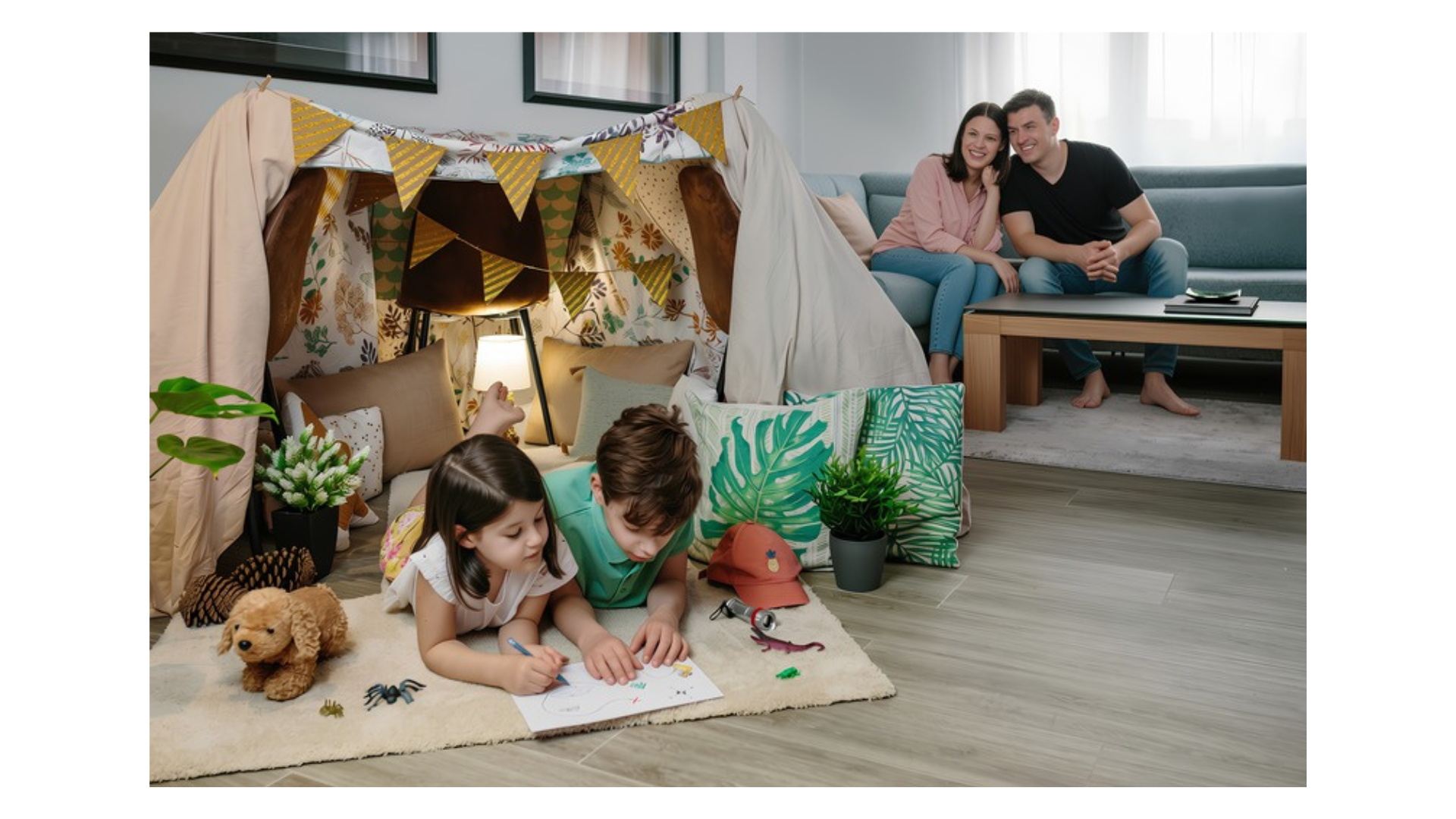
Or watch what happens in a lounge room on a rainy afternoon. A child who could walk from the couch to the door in four steps builds an obstacle course instead, then runs it twenty times.
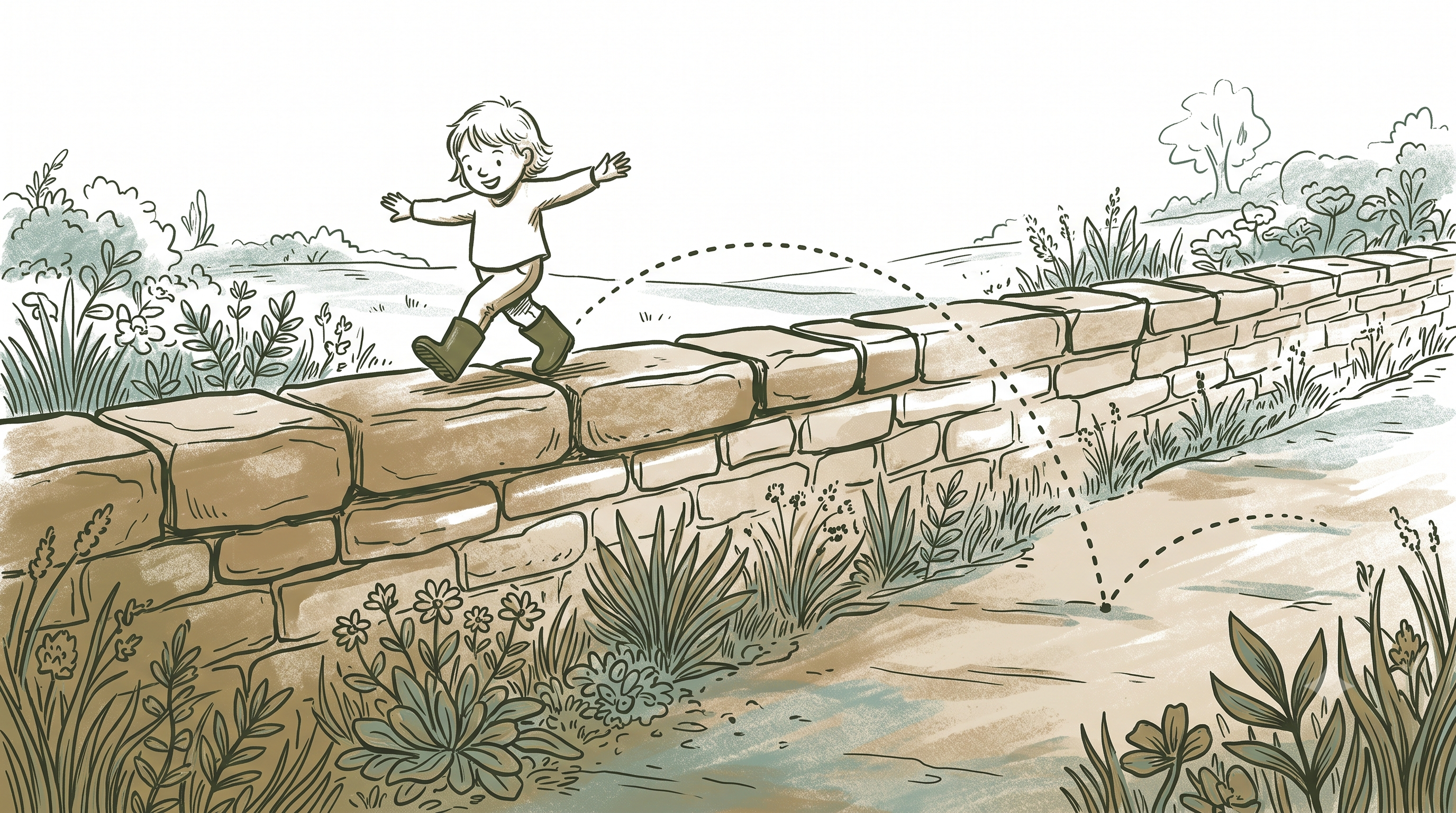
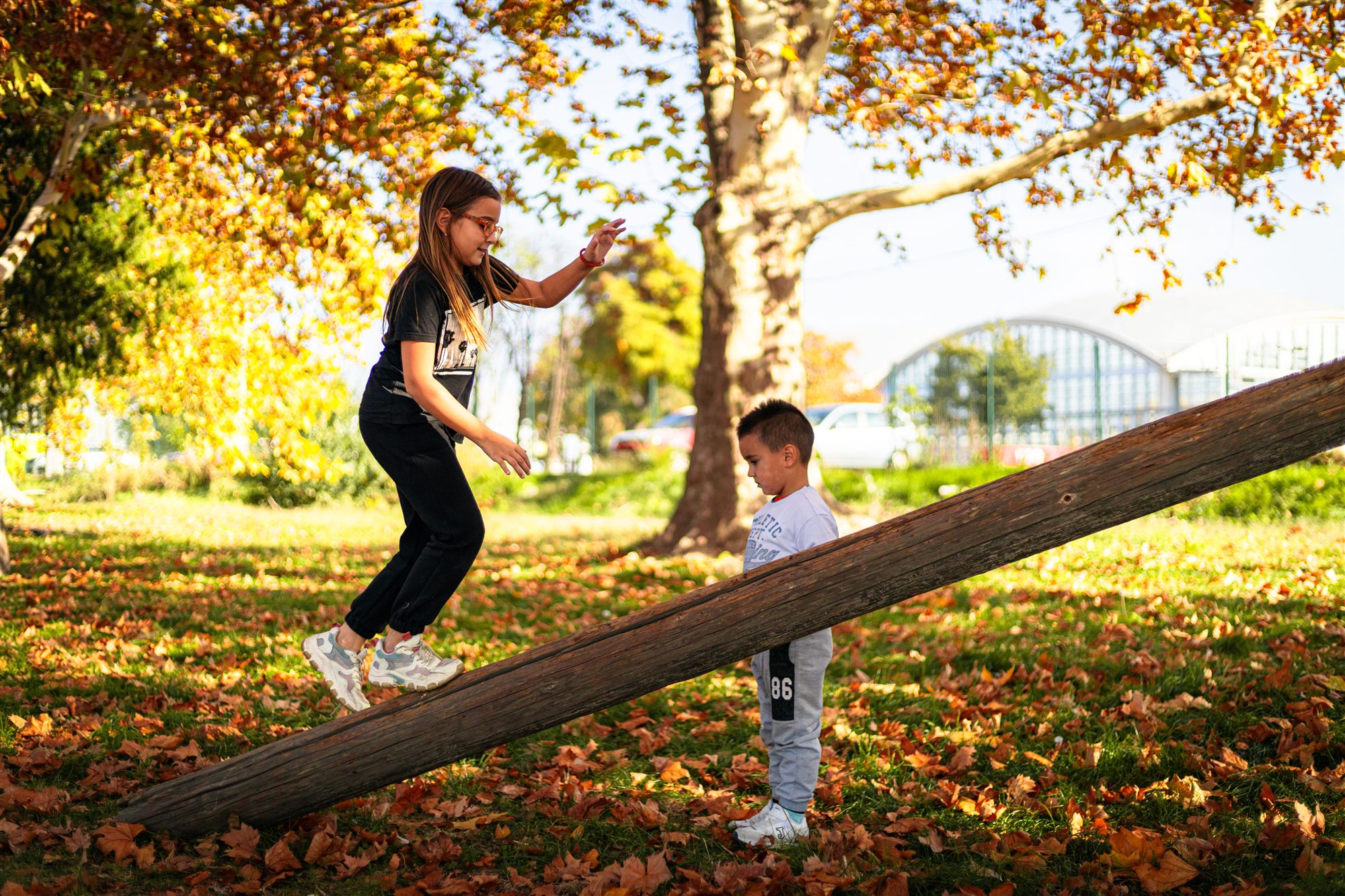
Nobody taught them to do that. Children choose the harder path on purpose, because that is how they grow. They are drawn to exactly the experiences their development needs next: climbing, balancing, spinning, throwing rocks into puddles, stepping on cracks or carefully not stepping on them. All over the world, without a single lesson plan, children do these things.
That drive to seek out the next challenge is the most reliable force in your child's life. It never switches off, it only gets buried.
This little book is about what that drive is building, why so much of modern childhood works against it, and how you can work with it instead, which mostly means taking things off your plate rather than adding more.
One thing I ask before you begin. Put aside what you think you know about education. Imagine for a moment that schools don't exist, and ask the question underneath everything: what do children need, to prepare them to create a life they love? That question has an answer. It is simpler than you have been led to believe.
You've seen this
Nobody taught your child to climb, to balance, to spin, or to take the long way round, and nobody needed to. That drive arrived with them, and it never switches off, it only gets buried.
Chapter 2
The struggle you can see, and the reason you can't
You may have picked this up because something is niggling. Your child works harder than they should have to for the results they get. Or they're doing fine on paper and you can see the light dimming anyway. You know the cost of a life spent working against your own grain, because you're an adult: you've watched it happen, in your own life or in lives around you. You don't want it for your child.
For twenty-five years I worked with children labelled as struggling: learning difficulties, attention problems, all sorts of diagnoses. Files thick with assessments. Parents worn thin from tutoring, therapies, reward charts. And underneath every label I found the same thing: a missing foundation, and a child working twice as hard as everyone else to compensate for it.
The surprise of those years: the children who most needed that help were rarely the ones anyone was watching. A visibly struggling child gets noticed, assessed, supported. A child who appears to be doing fine, compensating well enough to pass, stays off everyone's radar, and nobody knows they are struggling, sometimes not even them.
Here is the flaw at the heart of every schooling model, including most of the alternative ones: they assume the foundations are already in place. They assume a child arrives able to control where their eyes point, sense where their body ends, hold a rhythm, picture things in their mind. Then they stack reading, writing and maths on top.
When the foundations are there, the stack holds and learning looks effortless. When they're not, the child compensates. Compensation works for a while, which is why it fools everyone. But it is expensive. It burns energy that should be going into growth, and as the work gets more complex, the cost climbs:
- Simple tasks take enormous effort
- The child hits a ceiling where compensating stops working, often around grade three, then again in the teen years
- Learning turns from natural exploration into stress
- Confidence, motivation and spark drain away
If your child is bright but exhausted, capable in one area and inexplicably stuck in another, that is not a character flaw and it is not a disorder, it is a gap in the sequence. Gaps can be filled at any age. That's the whole story, and everything in this book follows from it.
A picture that helps. Imagine a builder who skips the slow, invisible work: no digging, no foundations, no walls, just a frame with a roof lifted onto it. From above, a drone would tell you that builder is winning: the roof is on, months ahead of the block next door. But stand in front of it and there is no house. Nothing to live in, nothing to build on, and everything added from here has to hold itself up. "Getting ahead" in childhood is mostly roof-first building: reading before the eyes can track a line, writing before the hand is ready, sitting still before the body knows where it is. It looks like progress from exactly one angle, and it costs the child for years.
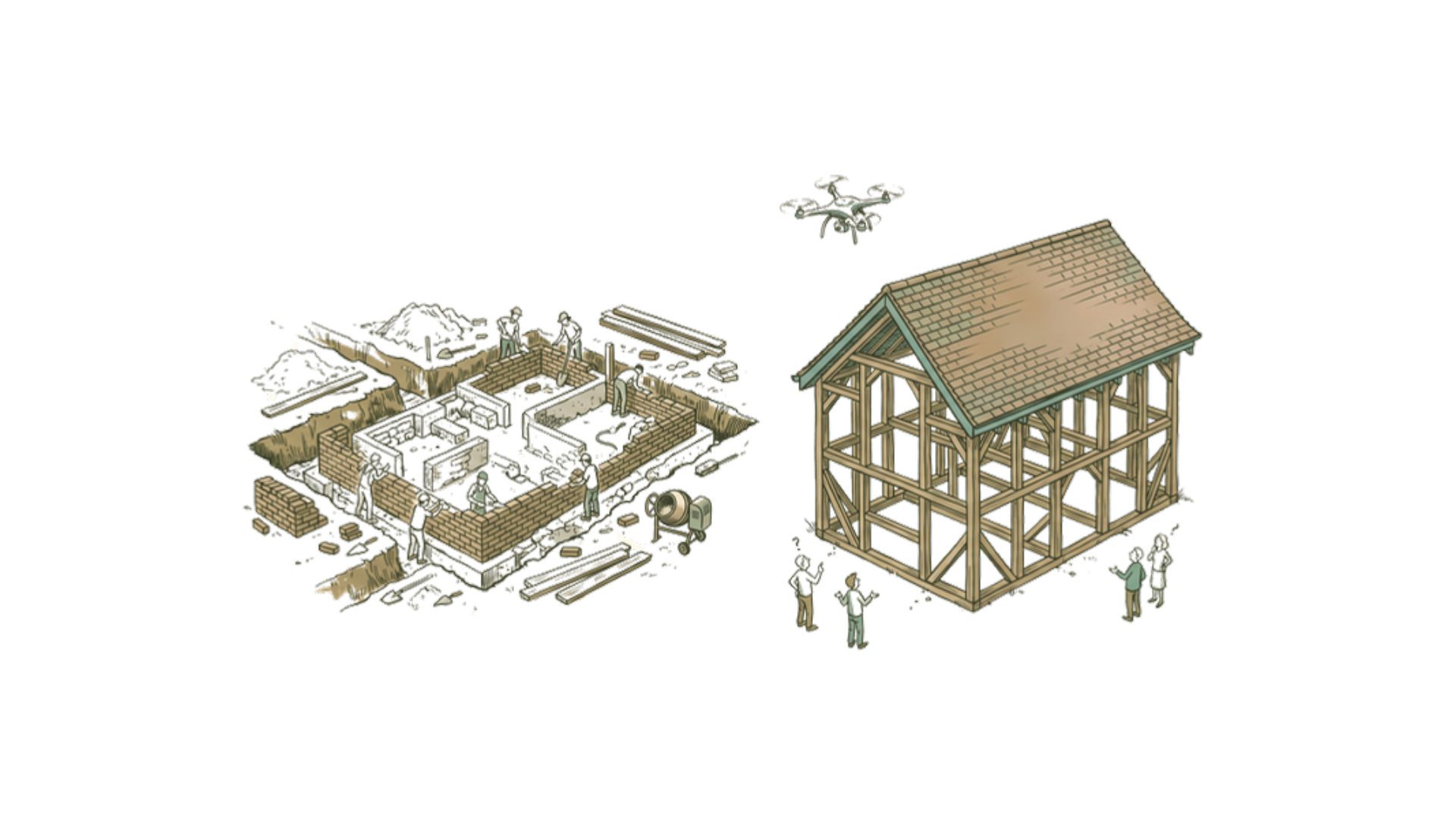
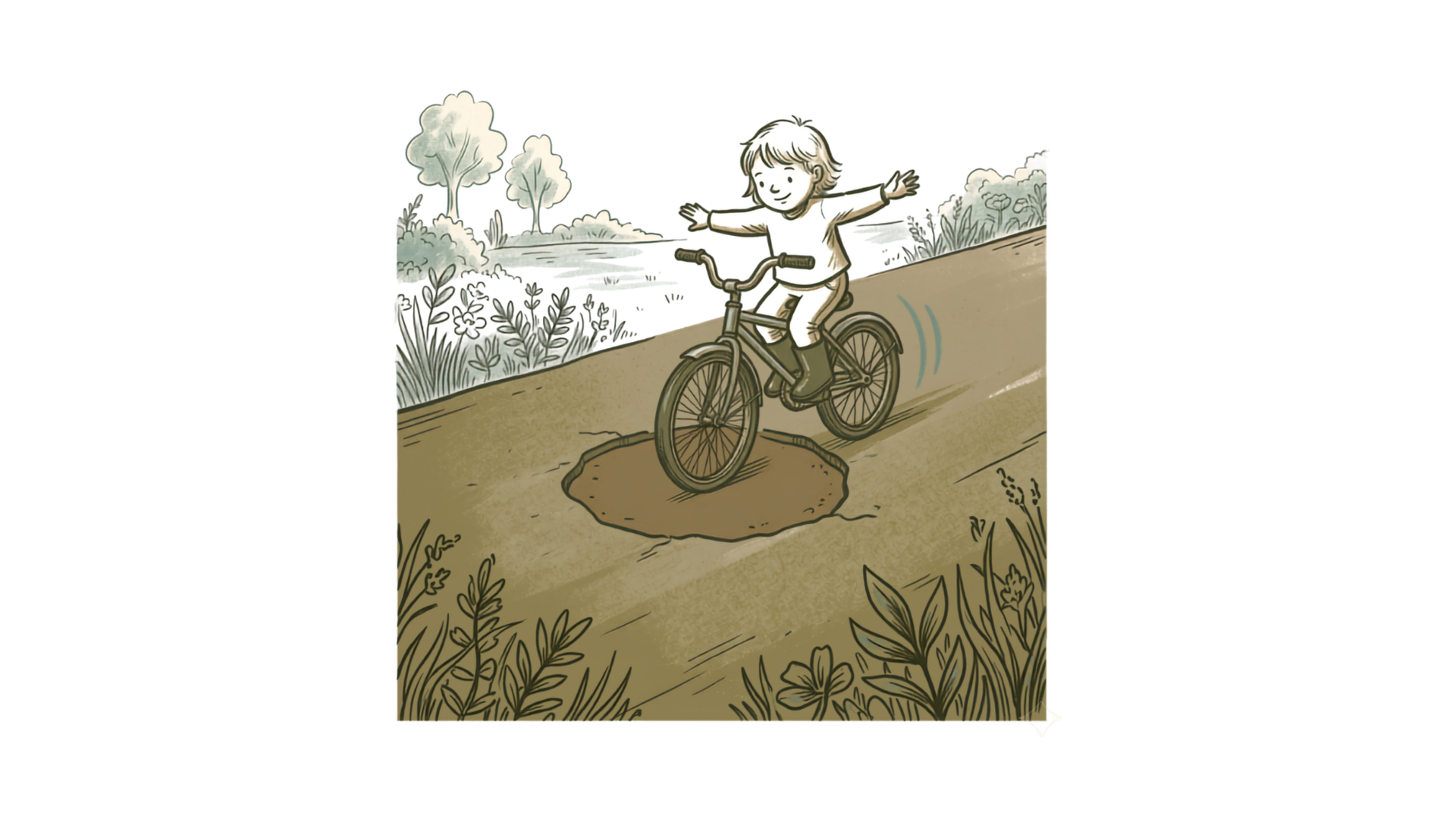
The good news sits in the same picture. Foundations can be built at any time, and when they go in, everything above them steadies. I have watched it again and again: fill the gap underneath, and skills nobody was drilling suddenly appear. "He's suddenly interested in reading." "It's like she grew up overnight." These aren't flukes. They are what a filled gap looks like: fill the pothole, and the whole ride smooths out.
You know this
If your child is bright but exhausted, capable in one area and inexplicably stuck in another, that is a gap in the sequence, never a verdict on the child.
Chapter 3
What the 7 Seeds of Success is
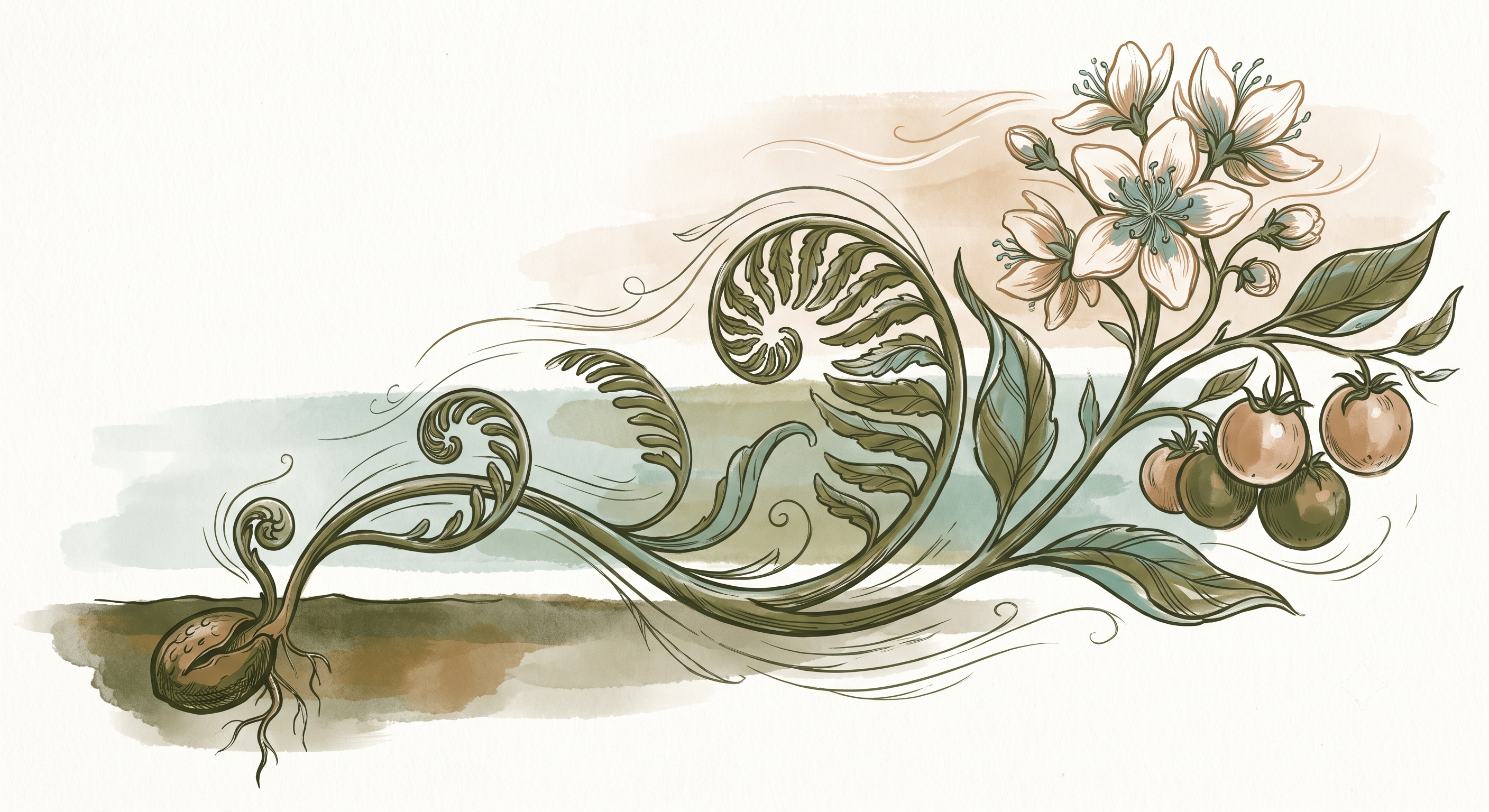
Three decades of watching children develop, professionally with hundreds of them and at home with my own, led me to something I wasn't expecting when I started: everything a human needs to learn, for their whole life, grows out of just seven foundational capacities. I call them the Seed Skills.
Like a tree that produces countless fruits from one root system, these seven seeds generate every ability a person will ever build: academic, social, creative, practical. They are not subjects and they are not my invention. They are what I uncovered, watching children do what children do everywhere, in every culture, with every kind of temperament. A seed already contains everything it needs to become a tree. Your child arrived with all seven planted.
The 7 Seeds of Success® is a developmental framework, not a curriculum. There is nothing to enrol in tonight, no worksheets, no schedule. It is a map of what is growing underneath everything your child does, so you can see where they are, notice what's missing, and water what matters. It works alongside school, homeschool or anything in between, because it operates at a level those systems assume and never touch.
The seven Seed Skills
Seed 1
Sensations
the self-sense
Knowing what is happening inside you: where your body is, what it feels, what those feelings mean.
- Fidgeting and clumsiness
- Big emotional weather
- Seeking out touch, or avoiding it
- Settles their own storms
- Directs their body with their mind
- Knows what they want
A reflectionWatch tonight: where does a big feeling land in your child first, hands, shoulders, voice? Knowing what is happening inside starts right there.
Seed 2
Senses
engaging with the world
Taking in the world and reading it well: distance, space, sound, faces, the unspoken rules of a room.
- Misjudging personal space
- Hesitating on playground equipment, overwhelmed in noisy places
- "Getting in trouble" without knowing why
- Judges distance, speed and space without thinking
- Reads faces and the unspoken rules of a room
- Moves through the world, and conversations, with ease
A storyOne little boy in my practice couldn't catch a ball; his eyes weren't working as a team, so he couldn't judge where the ball was. We built the seed underneath, not the catching. By four his eyes had learned to work as a team, and the catching came with them.
Seed 3
Rhythms & Patterns
the natural flow
Learning begins with rhythm, from a mother's heartbeat onward: patterns in music, movement, language, numbers, days, seasons, people.
- Clapping and marching out of time
- Reading or maths staying hard, however much drilling goes in
- Thrown when the day's rhythm changes
- Picks up language, music and maths as the patterns they are
- Reads the rhythm of days, seasons and people
- Learning flows instead of stalling
A storyWhen we built the sense of rhythm and pattern in children labelled with learning difficulties, academic performance improved, without a single phonics drill, because reading and maths are pattern recognition.
Seed 4
Vision
seeing what is and what could be
Sight, yes, and far more: picturing things in the mind's eye, remembering by seeing, imagining new possibilities.
- Instructions stay words instead of turning into pictures
- Loses the thread of a plan halfway through
- Struggles to picture how something will look before it's made
- Words turn into pictures
- Plans make sense, because they can be seen
- Solutions occur to them instead of having to be hunted down
A reflectionEverything humans have ever built began as a picture in someone's head. The next time your child describes something that doesn't exist yet, that's this seed, growing.
Seed 5
Structure
freedom through framework
A river without banks is a swamp. Structure is the banks: the shapes, habits and sequences that channel energy toward what you want.
- Life feels scattered
- Starts pile up without finishes
- Reaching any goal is exhausting
- Energy builds instead of leaking
- Habits and sequences carry the load
- Big jobs turn into steps on their own
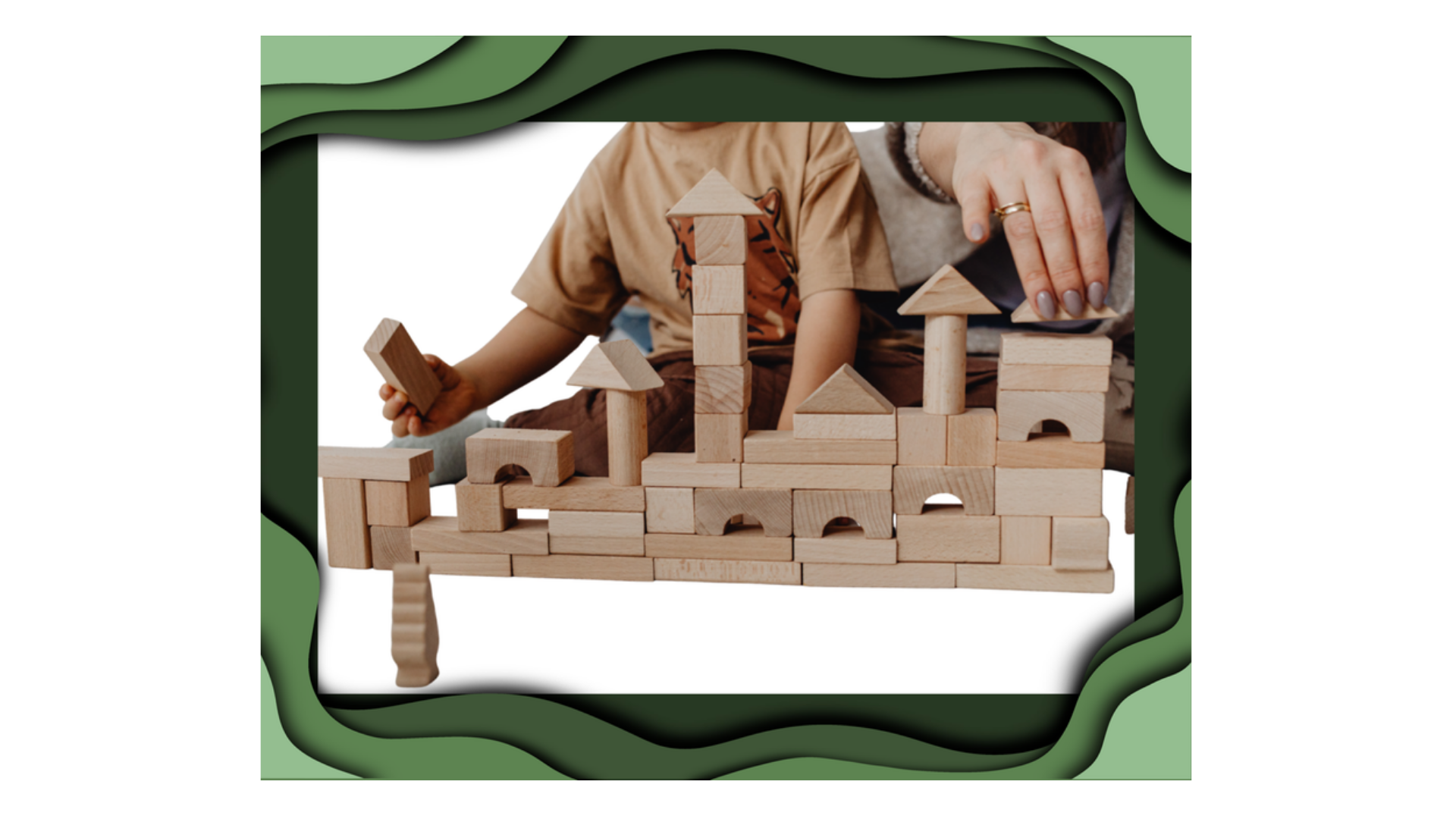
A reflectionThe point is not rigid routine. It is structure that serves the result, and children learn it by building things: block towers, cubby houses, plans for Saturday.
Seed 6
Focus
where attention goes, energy flows
The capacity to aim attention at one point, hold it there, and release it on purpose.
- Flares with enthusiasm, burns out in minutes
- Or the opposite: locks on and can't let go
- Taking things in feels like strain
- Takes things in without strain
- Energy goes where it matters
- Knows why they are doing what they are doing
A reflectionWhich one is your child: the flare that burns out, or the lock that can't let go? They look like opposites, and they are the same seed, still growing.
Seed 7
Will & Completion
bringing it home
The force that carries a vision through the messy middle and into the world, and consciously finishes.
- Projects stall at eighty percent
- Challenges lead to quick surrender
- Finishing only happens when someone pushes
- Persists because they choose to
- Finishes because finishing feeds them
- Every completed thing makes the next one easier to start
A storyOne of my sons, six or so at the time, looked up mid-cooking and told me: "well mum, everything's easy when you know how." That belief carried him for years. When the things he cared about later needed spreadsheets and measurements, he worked them out, despite believing he was no good at maths: he assumed it would be easy once he knew how, and it was.
Seven seeds. That's the whole list. Everything else, from spelling to friendships to one day running a business, sprouts from these.
You've felt this
Think of anything you practised until it flowed. At first every move took effort to start and effort to finish. Deep enough in, each move created the momentum for the next. Your child's development works the same way: you don't push, each stage opens the next.
Chapter 4
Sequence beats age
Each Seed Skill grows through three levels: physical first, then mental and emotional, then the level where it becomes something closer to wisdom. Seven seeds by three levels: twenty-one skills, and a lifetime of growing them. The physical level always comes first. A child learns focus with their eyes before they learn it with their mind. They learn structure with blocks before they learn it with time. The body is the first classroom, and it is why so much of this framework looks, from the outside, like play.
 Wisdom emerging
Mental and emotional
Physical, always first
Wisdom emerging
Mental and emotional
Physical, always first
- 1Sensations
- 2Senses
- 3Rhythms & Patterns
- 4Vision
- 5Structure
- 6Focus
- 7Will & Completion
This is also why age is the wrong measure. Development follows sequence, not birthdays. A skill built on a missing skill wobbles, whatever age it is built at, and a gap filled late still transforms everything stacked above it. So we never ask "what should a seven-year-old be doing?" We ask "what is this child ready for next?" There is no behind, only the next step in the sequence, and the sequence can be rejoined at any point, at four or fourteen or forty.
One of my mentors used to say that we don't learn by doing more of what we don't know how to do. It is the truest sentence in education I know. The child who can't read doesn't need more reading. They need the thing underneath reading. Find that, build it, and watch what happens.
The question that changes it
We never ask "what should a seven-year-old be doing?" We ask "what is this child ready for next?"
Chapter 5
What this looks like on an ordinary day
Nothing in this framework requires a schedule, equipment, or a version of you with more energy than you have tonight. It requires presence and observation, in moments you are already living. Your role is not teacher. Children do not learn through being taught: they learn through experience, and they are already seeking the experiences they need. Your role is observant guide. Here is the whole method:
In that order, and mostly the first three.
Step back and observe. Before you change anything, spend a few days doing nothing but noticing. What does your child return to again and again? Climbing? Sorting? Building and smashing? Staring into space? Questioning everything you say? Those aren't random. They are developmental drives, your child's own system telling you which seed it is watering. Most parents already know what's going on with their child; their attention has just been hijacked by what supposedly needs to be done.
Notice what they avoid. The seed that needs watering is often hiding behind the thing your child dodges: ball games, drawing, being upside down, noisy rooms. What a child avoids is information.
Then stretch, lightly. Once you can see the inner mechanics behind the play, offer a little more than they can already do. Make it a game, a variation, an "I wonder how it would be backwards". Better still, do it yourself, badly, and let them catch you. When something needs working out, ask for their help before you offer yours. Children respond to being seen as powerful; some of our family's best learning happened when I told my boys I was stuck and meant it. When they stop fighting the power dynamic, energy goes back into growing.
That's it. No need for drilling, reward charts, or constant entertaining. You will feel clunky at first, the way you did on your first bike ride. Stay with it. The first shifts are usually small ones: more laughing, less fighting over the small stuff. Sometimes it moves so fast it looks like magic, and it isn't magic: it's what growth does when the gaps are filled.
And the wall from page one? Next time your child hops up on it, you'll see the balance work, the self-sensing, the focus, the will. You don't have to do anything. Don't call them down.
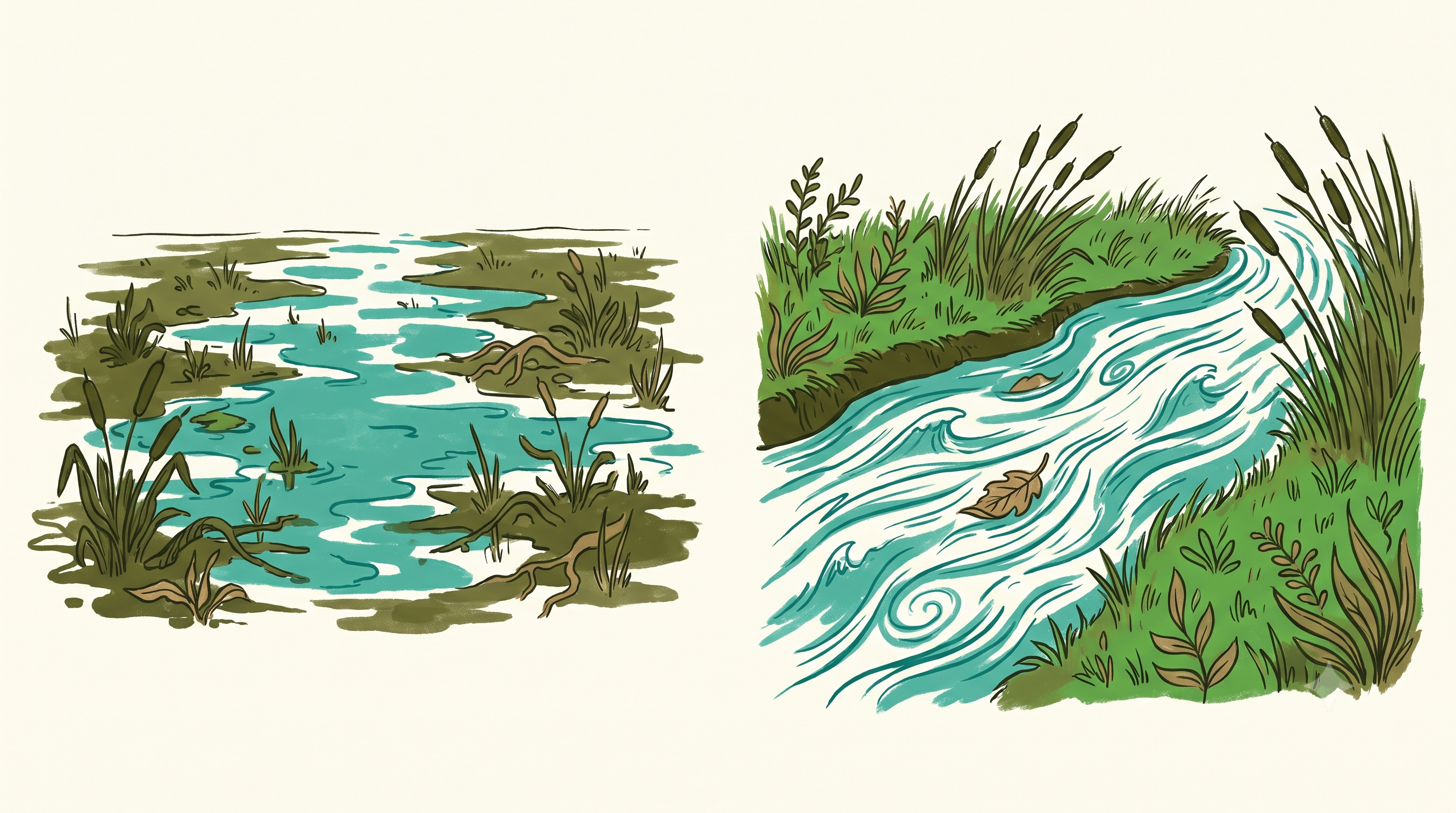
A river without banks floods into a swamp. Banks without water are just dirt. Together, they form a creative force: the banks direct the flow, and the flow, over time, re-carves the banks. Your child runs on the same principle: given room, their own movement builds the channels their growth flows through. Your job is mostly to stop damming it.
Tonight
Watch what your child returns to. The seed they are watering is in plain sight, and so is the one hiding behind the thing they avoid.
Chapter 6 · FAQs
The questions parents ask
Tap a question to open the answer.
Won't my child just grow out of these struggles?
Children are wonderfully adaptable, which mostly means they get better at compensating. The gaps don't fade with age; they become more expensive, because academic and social demands keep rising. If your child is working harder than the results justify, that's the sign. The best time to fill a gap is always now.
My kids are teenagers.
Is it too late?
No. The sequence can be rejoined at any age, and the teenage brain is primed for kinds of development that weren't possible earlier, so filling foundations in adolescence can produce fast, dramatic change. More years of compensating does mean more wasted energy, which is one more reason not to wait.
Do I need to become a teacher?
No, and please don't. Your child is already driven to develop these skills. You watch, understand the sequence, and create room for it to unfold. Parents tell me this changes the feel of family life more than anything else: the nagging, forcing and bribing stop making sense.
Will this conflict with school?
It doesn't conflict with academics; it's what makes academics easier. A child with strong Seed Skills grasps ideas with less effort and engages better with whatever environment they're in. Nothing here asks you to fight your child's school. It asks you to build what the school assumes.
What about reading, writing and maths?
They come in through the side door. Reading and writing to research something they care about, spreadsheets to run a market stall, geometry hiding inside a cubby-house design. When the foundations are in place and the goal is meaningful, academic skills arrive as side-effects, and they stick, because they were never the point. One of my favourite clients was a ten-year-old guitarist, a genuine talent, who had fought spelling and reading for years. They finally clicked when I showed him they were just like reading and writing music: patterns on a line, in sequence, telling you what comes next. Nothing about him changed that day, only the doorway did.
How do I know if my child is missing a Seed Skill?
The simplest indicator: effort out of proportion to results. A bright child stuck on something far simpler than what they can do elsewhere. Struggles with focus, coordination, big feelings or friendships are all clues, and they're clues to a gap, never to a verdict on the child.
This sounds too simple.
The most powerful solutions usually are. Our culture is geared for complex interventions, so the obvious gets missed. Simple is not the same as easy: it takes courage to choose foundations while everyone around you is buying more tutoring. But simple is why it works, and why it leaves your family time to live.
Chapter 7
About BeAta
(Yes, the capital A is deliberate: it's Be-Ata, not "beater".)
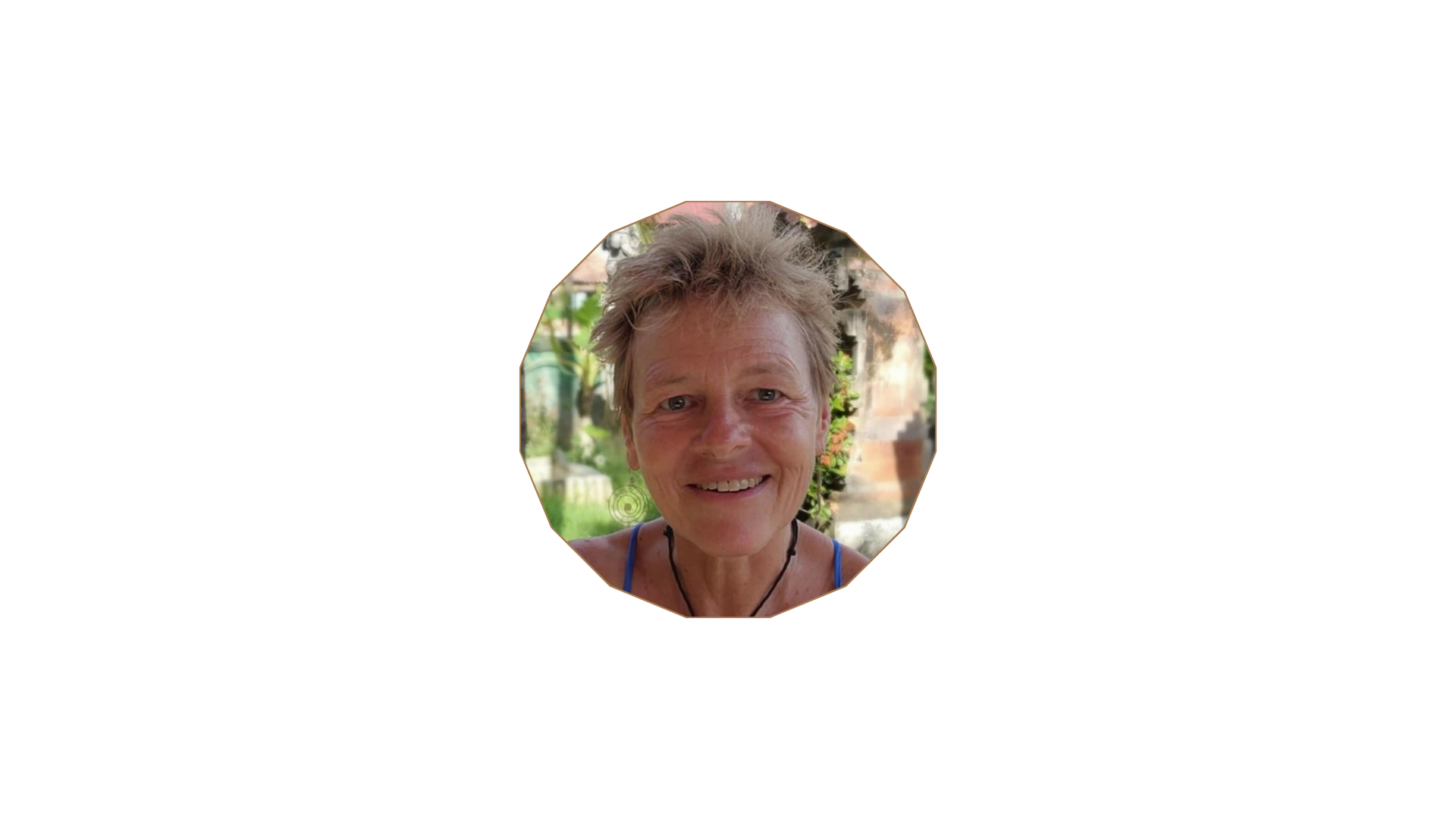
When I was four, I asked my babysitter how reading works. Within days of understanding the pattern, I was reading. Nobody drilled me. I wanted to know, and my brain worked it out. That moment planted a question that has run my whole life: how do humans learn?
I spent twenty-five years in behavioural developmental optometry chasing that question, working with hundreds of children labelled struggling or behind. The pattern I met, over and over: the system was asking children to use skills they hadn't yet developed, and the children were paying for it in effort, confidence and joy. I eventually left that work, because helping children perform better at school had stopped feeling like the point. They were developing great skills and using them to comply.
Then I watched my own sons gradually lose their spark after starting school, despite committed and caring teachers doing their best inside the structure. So we tried a six-month experiment in learning outside school. It lasted ten years, and it became the most profound research project of my life. I stopped trying to teach and started paying attention to how my boys naturally learned. The patterns I saw confirmed everything from my professional decades, and went further: universal principles, holding regardless of age, subject or personality. As my sons grew into adults I love spending time with, those principles crystallised into the 7 Seeds of Success®.
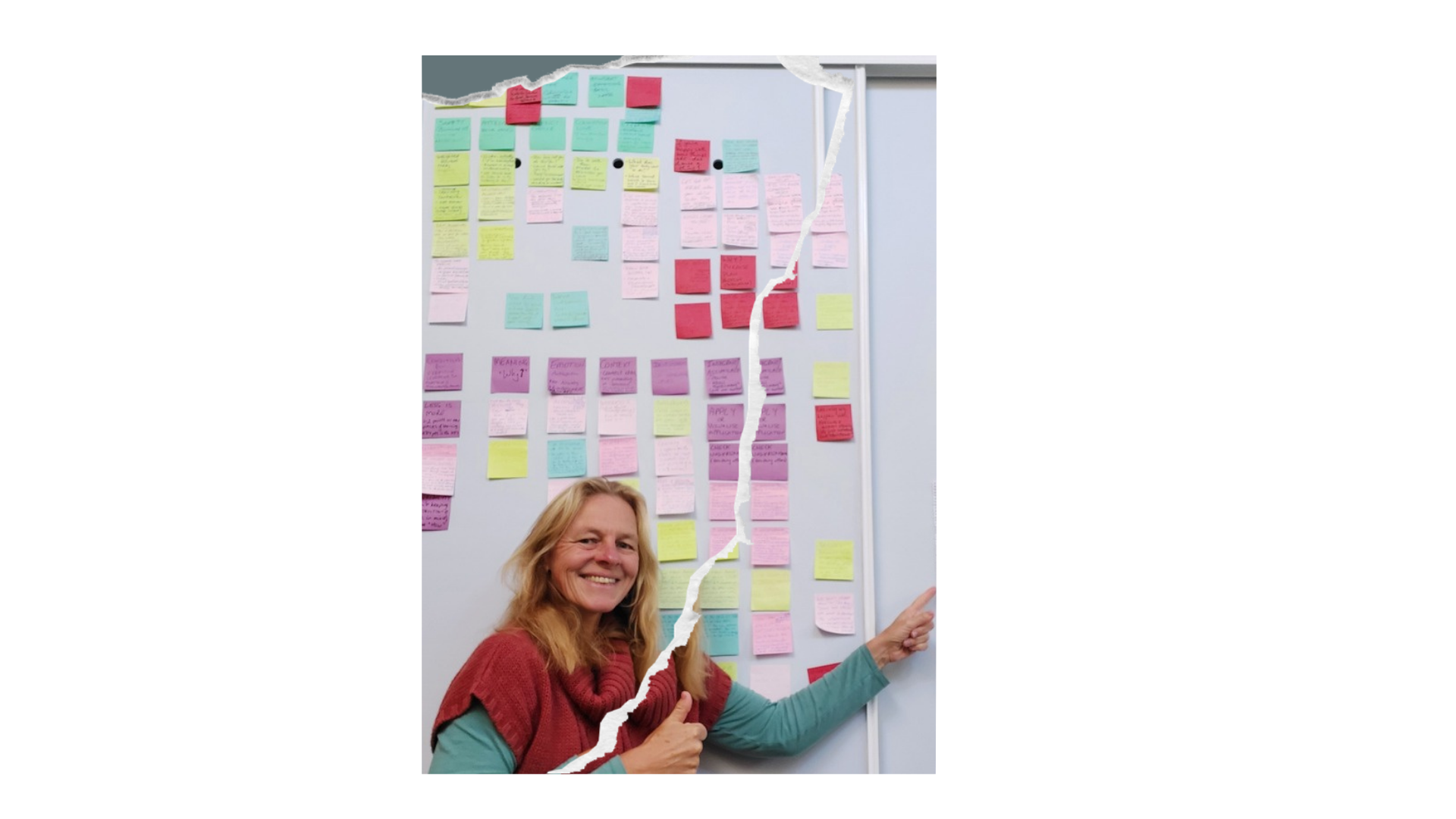
They're what I uncovered: decades of observation, training and research, thousands of conversations, and countless hours of watching children explore. Along the way I've blended ancient wisdom with current science, the intuitive with the evidence-based, because truth doesn't live in just one realm.
Why do I do this?
Because I believe every human being needs the opportunity to know, express and share their innate genius, and to create a life they love waking up to. I'm not here to convince you of anything, or to tear down the schools. I'm here for the moment you hear the voice that says "I wish there was another way." There is. It starts with seven seeds.
Chapter 8
Where to from here
You now know what the 7 Seeds are and why they matter, which puts you ahead of where I was after my first decade of professional training. Start tonight, with nothing but observation.
This book gives you the map. The Raise Brilliant Kids Program walks it with you: what to look for in your own child, seed by seed, one short video a day for thirty days.
Start tonight. The wall that takes them from here to there is ready now. Let them hop up.
© BeAta Fuller. 7 Seeds of Success® is a registered trademark.